

Quick summary: A wireless microphone is a two-part system: a transmitter (the microphone itself or a small bodypack) and a receiver connected to the sound system, sending audio over radio waves without cables. The main types are handheld for presenters and hosts, lavalier for lectures, and headset for active performances. To choose, ask: what will I do, where will I use it, and how many microphones will run in the same room at once?
Many people look for a wireless microphone for a conference, lecture or party without knowing how much the options differ in type, frequency and channel count. This guide explains how wireless microphones work, their types, the difference between UHF, VHF and 2.4 GHz, typical prices in Saudi Arabia, and how to choose the right microphone for conferences and events.
What is a wireless microphone and how does it work?
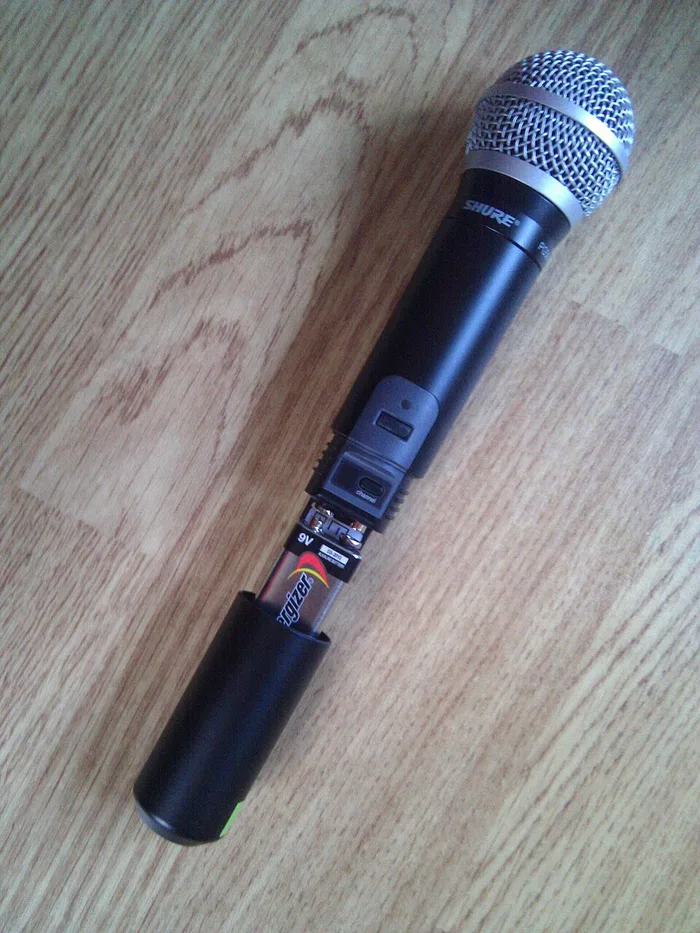
A wireless microphone converts sound into an electrical signal and sends it over radio waves to a receiver connected to a speaker or mixing desk. Each wireless microphone basically needs its own receiver, while dual receivers can serve two microphones. The main benefit is freedom of movement within signal range, with no cables to trip over on stage.
Types of wireless microphones
| Type | Form | Best for |
|---|---|---|
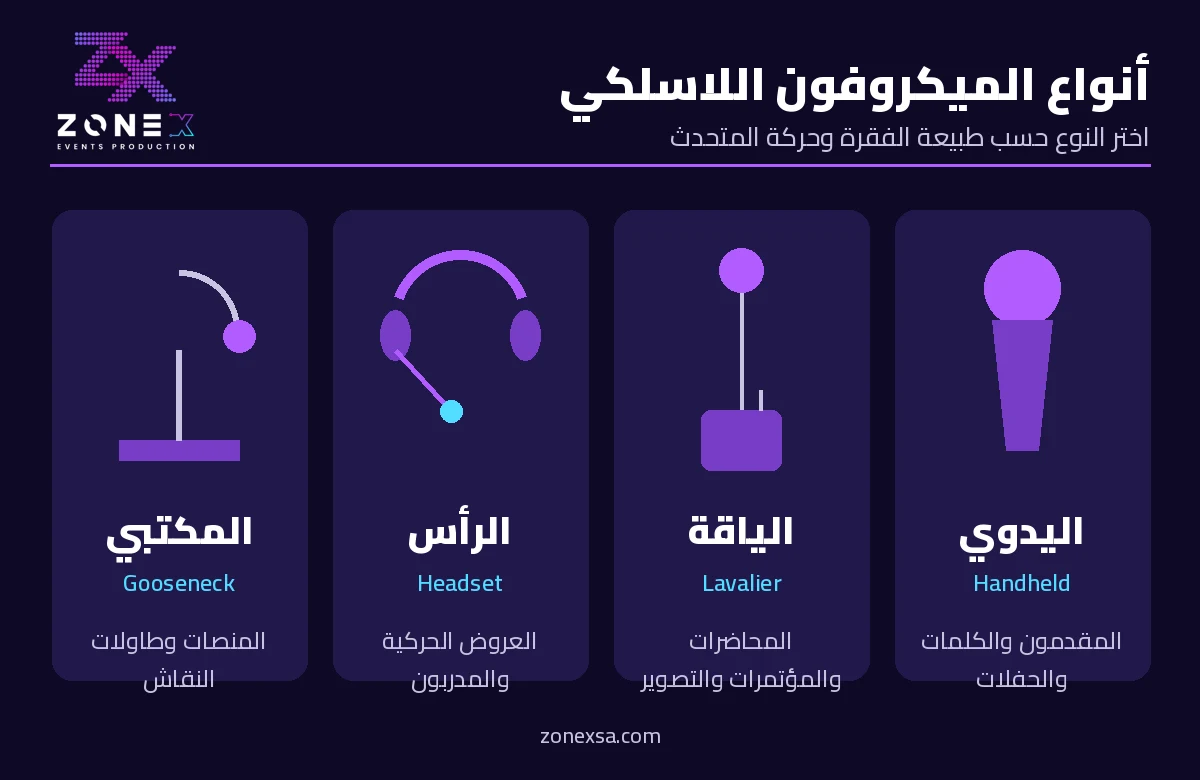
| Handheld | Microphone and transmitter in one body | Hosts, speeches, parties, singing, audience Q&A |
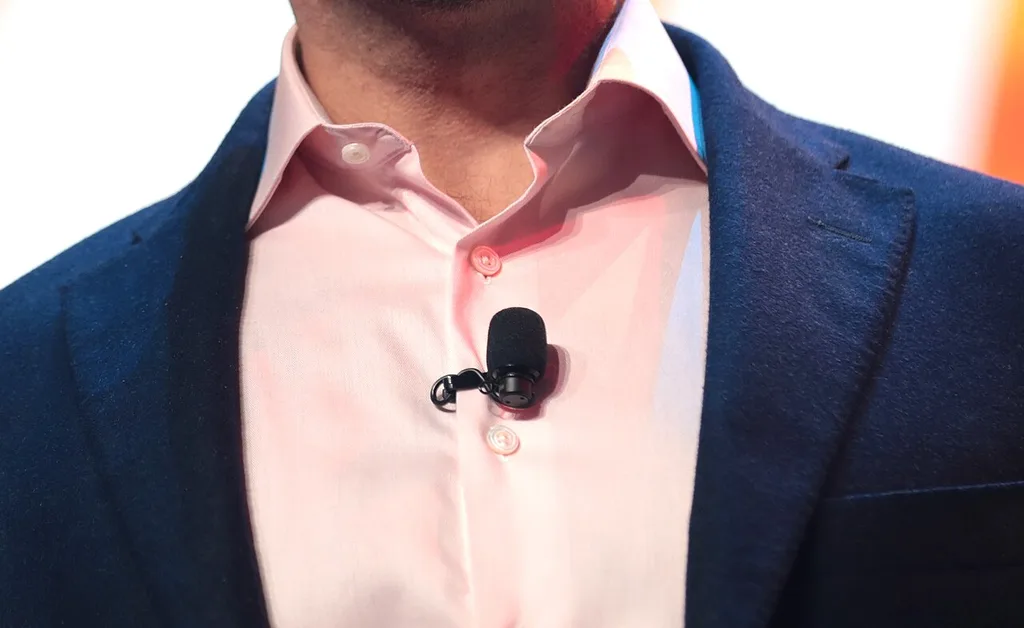
| Lavalier (lapel) | Small clip-on mic connected to a belt pack | Lectures, conferences, theater, filming; hands stay free |
| Headset | Mic fixed near the mouth with a head frame | Active performances, dance, trainers, live shows |
| Desktop / gooseneck | Mic on a base on the podium or table | Official podiums, panel tables, meeting rooms |
Wireless microphone frequencies: UHF, VHF and 2.4 GHz
- UHF: the industry standard for most professional applications, operating across multiple bands available for wireless microphones and supporting more simultaneous mics.
- VHF: an older, simpler band used in budget systems, with fewer options for running several mics.
- 2.4 GHz (digital): common in compact digital systems and phone mics, sharing the band with other wireless devices.
There are no frequency ranges reserved exclusively for wireless microphones, and permitted frequencies, transmit power and requirements vary by country, so make sure your equipment complies with the regulations in Saudi Arabia.
Pros and cons of wireless microphones
| Pros | Cons |
|---|---|
| Freedom to move on stage and among the audience | Budget systems may sound worse than wired mics |
| No cables on the floor | Frequency clashes cause noise or dropouts if channels are not coordinated |
| Faster stage setup | Higher price and need for batteries or charging |
Systems from different manufacturers are usually not compatible, and even the same brand may not be compatible across series.
Wireless microphone for lectures
A lavalier or headset microphone is the best fit for lectures and training, leaving the speaker's hands free and keeping a constant distance from the mouth for steady volume. Add a second handheld mic for audience questions.
Small wireless microphones for phones and Bluetooth
Compact wireless phone mics (USB-C, Lightning or Bluetooth) are designed for content creation, filming and live streaming with one or two speakers close to the phone. For halls and conferences with speakers and several presenters, a professional wireless system connected to the sound system is the better choice.
How much does a wireless microphone cost in Saudi Arabia?
| Category | Market example | Approximate price |
|---|---|---|
| Small wireless phone mic | Boya Mini / BY-V | SAR 149 to 215 |
| Party and karaoke mic for speakers | JBL PartyBox Wireless Mic | SAR 575 (discounted from SAR 669) |
| Professional content-creation system | DJI Mic | From about SAR 809 |
| Compact content-creation system | RØDE Wireless GO | About SAR 979 |
Source: Jarir Bookstore product page and Google's answer citing it, 4 October 2026. Professional UHF systems for halls cost more and vary by channel count.
How to choose a wireless microphone for conferences and events
Shure suggests starting with three questions: What am I planning to do? Where will I set up the mics? How many microphones do I need in the same room at once? Then check:
- Use case: formal speech, lecture or active performance.
- Number of simultaneous mics: more mics need more channels and frequency coordination.
- Frequency agility: automatic scanning for a clear channel.
- Digital or analog: digital systems deliver a more natural sound with full dynamic range.
- Battery: check runtime and prefer rechargeable options.
- Receiver placement: keep a clear line of sight between transmitter and receiver.
Event-day tips
- Scan frequencies in the venue and assign a different channel to each mic.
- Use fresh or fully charged batteries for each session and keep spares near the stage.
- Test sound from audience seats, not only from the mixing desk.
- Keep receivers away from Wi-Fi routers and large screens where possible.
- Have a backup mic ready on a separate channel.
Buy or rent?
For daily use in a fixed hall, buying makes sense. For conferences, parties and exhibitions that need several mics and a sound engineer to coordinate frequencies and batteries, renting with an operating crew saves cost and risk. Zonex offers sound system rental for events, including wireless microphones, speakers and mixers with full operation, as part of conference organizing. If you are preparing an exhibition booth with presentations, the right mic avoids disturbing nearby stands. See also types of events.
Frequently asked questions
What is the best wireless microphone?
It depends on use: professional multi-channel UHF systems for halls and events, and compact systems such as DJI Mic or RØDE Wireless GO for content creation.
How much does a wireless microphone cost?
In Saudi Arabia, small phone mics start around SAR 149, party mics around SAR 575, and content-creation systems around SAR 809 to 979; prices change often.
Does a wireless microphone need internet?
No. It sends audio over radio waves between transmitter and receiver.
Can several wireless mics work in the same room?
Yes, as long as each mic runs on a different frequency with its own receiver; frequency-agile UHF systems make this easier.
What is the best wireless mic for lectures?
A lavalier or headset mic, because it keeps the hands free and the volume steady.