
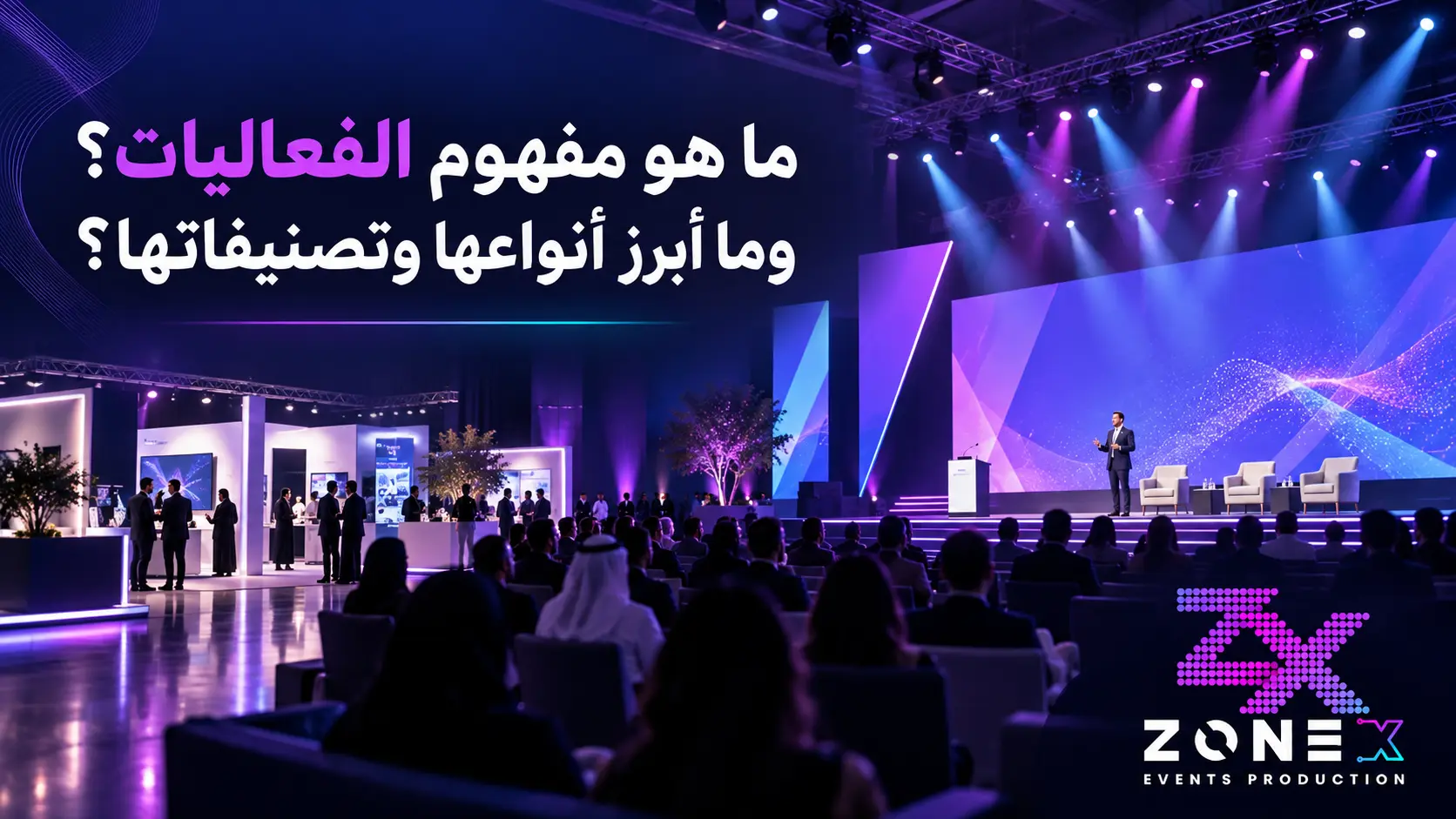
Events have become an important part of communication, marketing, entertainment, and knowledge exchange. They give organizations an opportunity to meet their audiences directly and present their ideas and messages through a real experience that attendees can engage with.
A successful event involves much more than choosing a suitable venue or preparing an engaging program. It begins with defining the objective, understanding the target audience, selecting the right type of event, and planning every organizational and technical detail. What are events? Why are they important? What are their main types and classifications? And how can you choose the right event and turn it into a professional experience? This article answers these questions.
What Are Events?
Events are activities and occasions organized according to a defined plan and held at a specific time and place to deliver an impactful experience for an audience. They may be entertainment, cultural, educational, sports, commercial, or marketing events.
The concept of events combines a creative idea with professional planning and execution. This includes choosing the venue, preparing the content, managing attendees, coordinating teams and suppliers, providing technical equipment, operating the event, and supervising its delivery.
Together, these elements help the organizing entity achieve its objectives and deliver an integrated experience that remains in participants’ memories instead of becoming a temporary occasion that ends with its program.
Why Are Events Important, and What Are Their Objectives?
Events are an effective way to communicate directly with audiences and create memorable experiences. Their importance lies in strengthening the organizer’s image, increasing brand awareness, and building strong relationships with customers and partners, as well as supporting cultural, tourism, and economic activity.
Event objectives vary according to the nature of the event and its target audience. An event may aim to:
- Deliver a distinctive entertainment experience.
- Share knowledge and raise awareness about a particular subject.
- Launch a new product or service.
- Increase brand awareness.
- Attract potential customers and support sales.
- Build professional and commercial relationships and partnerships.
- Strengthen communication among employees.
- Celebrate a national or social occasion.
- Promote a tourism or cultural destination.
- Support a community or charitable initiative.
- Encourage audience interaction and participation.
Event success can be measured through attendance, engagement levels, participant satisfaction, overall reach, and the actual results achieved compared with the objectives defined before the event began.
What Motivates People to Attend Events?
People attend events in search of a different experience that combines value, enjoyment, and direct interaction. Their motivation may be to gain new knowledge, discover the latest products and services, enjoy performances and activities, or build professional and social relationships.
Events also give attendees an opportunity to participate, communicate, and feel part of a community that shares their interests. Audiences may also be drawn to a particular event because of a well-known speaker, an exclusive experience, a live presentation, or an opportunity to connect with experts and specialists.
The more engaging the content, professional the organization, and relevant the experience is to the audience’s needs, the more likely the event is to attract attendees and leave a positive impression.
What Are the Main Types and Classifications of Events?
Events vary according to the objective they seek to achieve, the target audience, attendance size, venue, and method of participation. Understanding these classifications helps organizers choose the right type of event and determine its planning and setup requirements.
First: Events Classified by Objective
The event’s primary objective is one of the most common ways to classify it. The main types include:
- Entertainment events: Designed to entertain audiences, such as concerts, festivals, theatrical performances, games, and interactive experiences.
- Cultural and artistic events: Promote culture, art, and heritage, including book fairs, art exhibitions, literary evenings, and film and theatre festivals.
- Sports events: Target sports enthusiasts and encourage activity and competition, such as matches, tournaments, marathons, motor races, and esports competitions.
- Educational and training events: Transfer knowledge and develop skills through courses, workshops, lectures, seminars, and scientific conferences.
- Commercial events: Help companies showcase products and services and build partnerships through trade shows, business forums, and investment conferences.
- Marketing events: Strengthen brand presence and customer communication through product launches, branch openings, promotional experiences, and product sampling.
- Corporate events: Organized by companies and institutions to serve internal or professional objectives, such as employee meetings, recognition ceremonies, and team-building events.
- Social events: Connected to personal and family occasions, including weddings, graduations, baby welcomes, and social gatherings.
- National and official events: Held to celebrate national occasions or receive delegations, such as National Day celebrations, opening ceremonies, and official conferences.
- Community and charitable events: Serve the community and raise awareness of important issues through donation drives, environmental initiatives, charity markets, and health campaigns.
- Tourism events: Attract visitors and promote destinations through seasonal festivals, city tours, beach events, and activities at heritage sites.
Second: Events Classified by Attendance Size
Events can be divided according to the number of participants into:
- Small events: Welcome a limited number of attendees and make direct communication easier, such as meetings, workshops, and private sessions.
- Medium-sized events: Require broader organization to manage registration, attendance, and services, such as professional conferences, local exhibitions, and graduation ceremonies.
- Large-scale and mass-attendance events: Attract large audiences and require integrated plans for operations, security, transport, crowd management, and emergencies, such as festivals, major concerts, and international exhibitions.
Event size is not determined by attendance alone. It also depends on the venue area, number of activities, scale of required equipment, event duration, and number of teams involved in delivery.
Third: Events Classified by Geographic Scope
This classification depends on the area covered by the event and the audience it attracts:
- Local events: Held within a particular city or area and aimed at its residents and visitors.
- National events: Attract participants from different regions within the country, such as national celebrations and major exhibitions.
- Regional events: Bring together participants from several countries within one geographic region, such as forums and exhibitions for GCC countries.
- International events: Host visitors, speakers, and exhibitors from several countries and require specialist services such as interpretation, delegation reception, travel, and accommodation arrangements.
As the event’s geographic scope expands, the need for early planning and coordination among different parties increases, along with services that accommodate differences in attendees’ languages, cultures, and needs.
Fourth: Events Classified by Delivery Format
Events can be classified according to how audiences attend and participate:
- In-person events: Participants attend the venue, allowing direct interaction with activities, speakers, and exhibitors.
- Virtual events: Held online through streaming and digital meeting platforms, enabling access for audiences in different cities and countries.
- Hybrid events: Combine onsite attendance with online participation and require suitable technical equipment to provide a strong experience for both audiences.
The delivery format should be selected according to the nature of the content, audience location, budget, required level of interaction, and the need for participants to attend in person.
Fifth: Events Classified by Venue Type
The event location affects the equipment, services, and operational plans required:
- Indoor events: Held in halls, hotels, theatres, conference centers, and shopping centers, providing greater control over lighting, sound, and temperature.
- Outdoor events: Held in squares, parks, beaches, and open spaces, requiring consideration of weather conditions, power sources, crowd management, security, and emergency plans.
- Touring events: Move between multiple cities or locations, such as promotional tours, mobile exhibitions, and cultural programs presented across several regions.
The venue should be selected after assessing attendance, activity requirements, accessibility, parking, security and safety requirements, and the technical equipment needed for the event.
Sixth: Events Classified by Target Audience
The nature of an event varies according to the audience it aims to attract. Key target groups include:
- Children and families: Require safe, enjoyable activities suitable for different age groups.
- Young people and students: Usually focus on education, entertainment, modern technology, and competitions.
- Employees and professionals: Aim to provide training, exchange expertise, and develop professional relationships.
- Investors and business leaders: Focus on investment opportunities, partnership building, and commercial networking.
- Customers: Introduce products and services and strengthen their relationship with the brand.
- Tourists and visitors: Receive experiences connected to the destination’s culture, landmarks, and tourism activities.
The target audience directly influences the language of the content, how the event is promoted, the activities selected, the level of equipment required, and the most suitable time and place.
Seventh: Events Classified by Duration
Events can be classified according to their duration and frequency:
- Short events: Last several hours or one day, such as meetings, seminars, and product launches.
- Multi-day events: Extend over two or more days, such as conferences, exhibitions, and festivals.
- Seasonal events: Take place during specific seasons, such as summer, winter, Ramadan, and Eid events.
- Recurring events: Repeat weekly, monthly, or annually according to a defined schedule.
Extended or recurring events need an operating plan that maintains service quality, distributes team responsibilities, supports equipment maintenance, and renews activities to sustain audience interest.
Eighth: Events Classified by Type of Participation
The audience’s role differs from one event to another, allowing events to be divided into:
- Spectator events: The audience mainly watches performances, matches, or presented content.
- Interactive events: Attendees participate through games, experiences, workshops, and competitions.
- Networking events: Aim to build relationships and exchange expertise, such as business forums and professional meetings.
- Competitive events: Center on competition among participants, such as sports tournaments, cultural competitions, and innovation challenges.
Many modern events combine observation with participation because interactive experiences give audiences an active role and help increase engagement and memorability.
How Do You Choose the Right Event?
Choosing the right event depends on the objective you want to achieve, the audience you aim to reach, and the available budget, time, and resources. Consider the following points to make the right choice:
- Define your primary objective: Select the event according to the result you want, whether it is increasing brand awareness, launching a product, training employees, or entertaining an audience.
- Understand your target audience: Identify attendees’ interests, ages, and needs, then choose content and activities that suit them.
- Set the available budget: Calculate venue, equipment, marketing, hospitality, staffing, and technology costs so you can choose an event that can be delivered to the required standard.
- Choose the delivery format: Decide whether the event will be in person, online, or hybrid according to the audience and its ability to attend.
- Determine the event size: Choose a small, medium-sized, or mass-attendance event based on expected attendance and your capacity to manage the venue and services.
- Select the right venue and date: Ensure the venue is accessible and suitable for the activities, and avoid dates that conflict with occasions important to your audience.
- Define the content and activities: Choose from performances, workshops, lectures, competitions, and interactive experiences that support the event objective and maintain audience interest.
- Assess organizational capabilities: Ensure that the team has the experience required to manage registration, reception, equipment, security, technology, and emergency situations.
- Prioritize the attendee experience: Provide a clear and comfortable journey from registration and arrival through participation and departure.
- Define how success will be measured: Select suitable indicators such as attendance, engagement rate, participant satisfaction, sales or leads generated, and overall event reach.
Ultimately, the right event is not measured only by its size or cost, but by how well it aligns with your objectives, audience, and capabilities, and by its ability to deliver an organized experience with a clear impact.
Turn Your Idea into an Event That Makes an Impact
Do you have an event idea and need a team to deliver it professionally? ZONEX supports you through planning, setup, and operation with solutions tailored to your objectives, audience, and budget.
Share your project requirements with us and let our team turn them into an integrated experience your audience will remember.
Contact ZONEX